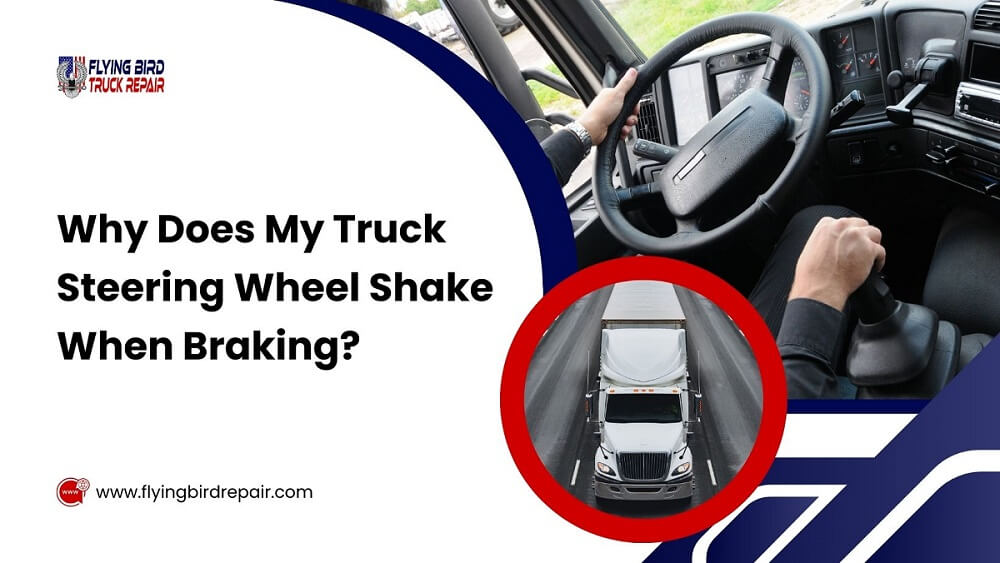
Have you noticed your truck’s steering wheel shaking when you brake? This problem can alarm any driver, especially when handling a heavy commercial vehicle. A shaking steering wheel affects your control, signals potential mechanical issues, and can reduce your truck’s performance and lifespan. By understanding the causes, you can identify problems early and prevent costly repairs or unsafe driving. In this blog, we explain the main reasons behind truck steering wheel shake when braking and show you how to fix them effectively.
Common Causes of Steering Wheel Shake When Braking
A shaking steering wheel when braking is a warning your truck needs attention. It can be caused by worn brakes, suspension issues, or tire problems. Identifying the cause early keeps your truck safe and performing well.
Warped Brake Rotors
One of the most common reasons for a shaking steering wheel is warped brake rotors. Over time, heat generated from braking can cause the rotors to deform slightly, especially during heavy hauling or frequent stops. This uneven surface causes the brake pads to grab inconsistently, producing a pulsation felt through the steering wheel.
In trucks, which are heavier than passenger vehicles, this vibration is amplified. The sensation is usually most noticeable when braking at higher speeds or on longer downhill stretches. Regular truck brake inspection helps identify rotor wear before it leads to unsafe driving conditions.
Worn Brake Pads
Brake pads are designed to create friction against the rotors to slow the truck down. Unevenly worn or thin brake pads can create a pulsing effect, which is transmitted directly to the steering wheel. Drivers may notice a rhythmic shaking that increases with braking pressure.
Signs of worn pads include squealing noises, longer stopping distances, and visible grooves on the rotor. Addressing worn pads early through truck brake repair service prevents further rotor damage and ensures braking efficiency.
Loose or Damaged Suspension Components
While braking issues often originate from brakes themselves, the suspension system can also contribute. Worn tie rods, ball joints, or wheel bearings can cause instability when stopping. Even minor play in these components can create vibrations that the driver feels in the steering wheel.
Suspension-related shaking tends to occur in combination with other steering issues, such as wandering or pulling to one side. Regular checks as part of truck repair in Bakersfield can detect these problems before they worsen.
Tire Issues
Many drivers overlook tires when diagnosing steering wheel vibrations. Out-of-balance tires, uneven tread wear, or tire separation can all mimic brake-related shaking. During braking, these irregularities become more pronounced because the tires are under increased stress.
Even if your brakes are functioning correctly, compromised tires can make steering unpredictable. Proper tire maintenance, balancing, and rotation are critical parts of a truck brake inspection routine to reduce these vibrations.
Brake Caliper Problems
Sticking or seized brake calipers can create uneven braking force across the wheels. If one caliper grips more than another, it can pull the vehicle slightly to one side during braking, producing a shaking sensation in the steering wheel.
Caliper issues often occur alongside rotor or pad wear and are more likely in trucks that frequently operate in heavy traffic or carry large loads. Identifying caliper problems early as part of a truck brake repair service ensures your braking system remains balanced and safe.
How to Diagnose the Problem
Diagnosing the root cause of a steering wheel shake when braking requires a systematic approach. Start with a visual inspection of the brake rotors and pads to check for obvious wear or grooves. Look at the tires for uneven wear patterns or damage that could contribute to vibration.
Next, test the suspension system. Examine tie rods, ball joints, and wheel bearings for play or looseness. Finally, consider the brake calipers and fluid system for sticking or uneven application. Professional mechanics often use specialized tools like dial indicators to measure rotor runout or vibration sensors to isolate the exact source of the problem.
Regular inspections, including a thorough truck brake inspection, are essential for keeping braking systems reliable. Even minor issues can quickly escalate into dangerous situations if left unchecked.
Solutions and Repairs
The solution depends on the underlying cause. Warped rotors may require resurfacing or replacement, while worn brake pads should be replaced immediately. Sticking calipers can often be repaired or replaced to restore even braking force.
Suspension issues such as worn tie rods or ball joints require professional replacement, and tires may need balancing, rotation, or even replacement. In some cases, a professional wheel alignment is recommended to ensure the truck tracks straight after brake or suspension work.
Scheduling a truck repair appointment at a trusted facility in Bakersfield ensures that all these components are checked and repaired correctly, keeping the truck safe and operational.
Preventive Maintenance Tips
Keeping your truck safe and vibration-free starts with regular maintenance:
- Schedule truck brake inspections to monitor rotors, pads, and calipers.
- Rotate and balance tires to ensure even wear and smooth steering.
- Inspect suspension components during routine truck repair checks.
- Avoid harsh braking to reduce stress on brakes and tires.
Following these steps helps prevent steering wheel vibrations and keeps your truck performing reliably.
Conclusion
A shaking steering wheel when braking is more than a minor annoyance—it signals that your truck may have issues with brakes, suspension, or tires. Addressing the problem promptly through professional truck repair in Bakersfield and a thorough truck brake inspection can prevent further damage, improve safety, and extend your truck’s lifespan. Don’t ignore these signs; scheduling timely service ensures your vehicle remains stable, safe, and smooth on the road.
FAQs About Truck Steering Wheel Shake When Braking
1. Why does my truck steering wheel shake when braking?
This is a common question from truck drivers. Steering wheel vibrations usually indicate issues with brake rotors, worn brake pads, suspension components, or tire problems. Early diagnosis through a truck brake inspection can prevent further damage.
2. How can I fix a shaking steering wheel in my truck?
Fixing the problem depends on the cause. Warped rotors may need resurfacing or replacement, worn brake pads should be replaced, and suspension issues require professional repair. Tire balancing or wheel alignment can also reduce vibrations.
3. Can bad tires cause my truck steering wheel to shake when braking?
Yes. Out-of-balance, unevenly worn, or damaged tires can mimic brake-related shaking. Regular tire rotation, balancing, and inspection as part of truck brake repair service helps maintain smooth steering.
4. How do I prevent my truck steering wheel from shaking?
Preventive maintenance is key. Schedule regular truck brake inspections, rotate and balance tires, check suspension components, and avoid harsh braking. This keeps your truck safe and vibration-free.
5. Where can I get professional truck repair for steering wheel shake in Bakersfield?
Trusted truck repair facilities in Bakersfield provide comprehensive truck brake inspection and repair services, including rotor resurfacing, pad replacement, suspension repairs, and wheel alignment to resolve steering wheel vibrations.