You’re hauling 40,000 pounds up a grade when the power suddenly stumbles, and the check engine light starts blinking. Your truck’s just gone into “limp mode,” and the offender is likely something smaller than a spark plug: the Fuel Rail Pressure Sensor (FRPS).
If you have a modern diesel (Cummins, Duramax, Powerstroke), this sensor is a must for you. It is the only thing that tells your engine control module (ECM) whether the terrible 30,000 PSI in your fuel rail is safe and it can go and fire.
Here you will know how the FRPS operates, signs that it might be failing, and what you can do before calling a tow truck.
What Is a Fuel Rail Pressure Sensor?
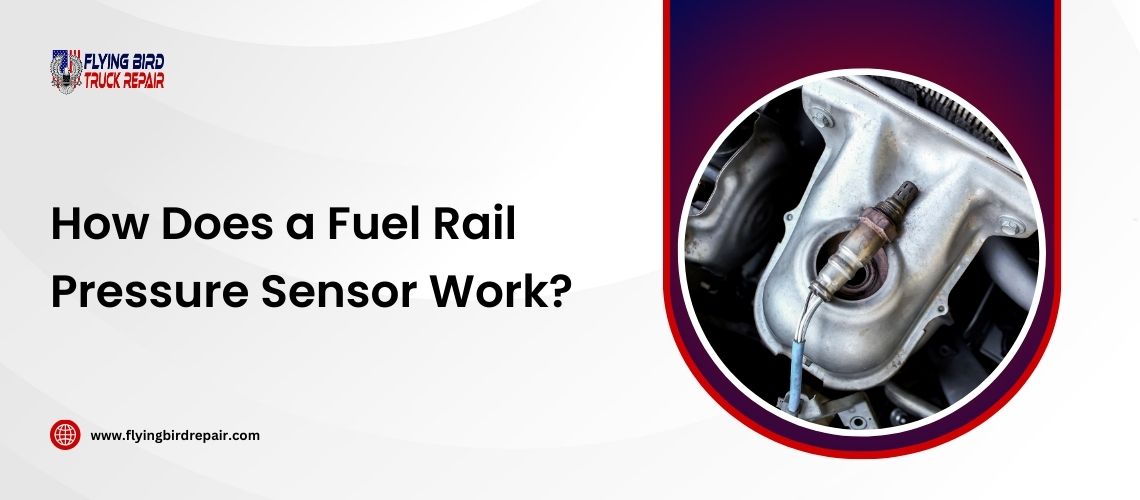
The Fuel Rail Pressure Sensor is a high-precision electronic transducer screwed directly into the common fuel rail (the high-pressure manifold that feeds your injectors). Think of your fuel system as a heart (the pump) and arteries (the rail). The FRPS is the blood pressure monitor.
It serves one critical function: Closing the Loop.
- The ECM Commands: It tells the high-pressure fuel pump how much pressure to build.
- The Pump Delivers: The pump sends fuel to the rail.
- The Sensor Verifies: The FRPS reads the actual pressure and reports it back to the ECM module so the computer can compare commanded vs. actual rail pressure in real time.
If the sensor’s reading doesn’t match the ECM’s command, the computer knows something is wrong—leaking injector, failing pump, or a bad sensor—and it immediately cuts power to save the engine.
How It Works: The “Piezo” Effect
While older sensors used mechanical parts, modern high-pressure diesel sensors typically use piezoelectric technology to handle extreme stress.
1. The Sensing Element
Inside the sensor is a tiny crystal element. When pressurized fuel pushes against this element, it physically deforms (flexes) slightly.
2. The Voltage Signal
This deformation changes the electrical signal the sensor sends out. The sensor converts this physical pressure into a readable voltage signal.
- Zero Pressure: The signal is low.
- High Pressure: The signal increases as pressure rises.
3. The 3-Wire Signal
The sensor communicates with the ECM using three wires:
- Power: The ECM sends a steady 5-volt supply to power the sensor.
- Signal: The sensor sends a voltage back (usually 0.5V to 4.5V) depending on pressure.
- Ground: Completes the circuit.
The Translation:
- 0.5 Volts: Engine off, 0 PSI.
- ~1.0 – 1.2 Volts: Idling (approx. 4,000–5,000 PSI).
- ~4.5 Volts: Full load/Wide Open Throttle (approx. 25,000–30,000 PSI).
Why is the Fuel Rail Pressure Sensor Important?
For truckers, the sensor can be a deciding factor between a smooth run and a breakdown on the roadside. It is important to understand the reasons it matters:
Ensures proper fuel delivery: Your engine cannot deliver the correct amount of fuel if there are no accurate pressure readings, which will result in power loss or engine knocking.
Prevents over-fueling or under-fueling: Excessive fuel results in unnecessary expenditure and black smoke; insufficient fuel causes your engine to run out of air and lose its performance.
Reduces emissions: In order to meet the strict EPA standards, modern trucks must carry a working sensor that keeps their emissions under control.
Protects your engine: Fuel pressure that is not correct can lead to injector damage, turbo failure, or, over time, even the destruction of the engine.
Symptoms of Failure: What You’ll Feel in the Cab
When an FRPS starts to fail, the symptoms are often erratic because the computer is receiving “confused” data.
1. The “Rattle” (Timing Issues)
Diesel timing is controlled by pressure. If the sensor reports pressure is lower than it actually is, the computer will command the pump to work harder. The result is excessive rail pressure, causing a distinct, loud “diesel knock” or rattle sound from the engine.
2. Hard Start / No Start
To start a modern diesel, the rail needs to build a minimum pressure (usually ~4,000 PSI) before the injectors will even fire. If the sensor reads “0 PSI” due to a fault, the computer will crank the engine forever but never fire the injectors.
3. Surging at Idle
If the sensor’s signal is “noisy” (fluctuating rapidly), the computer will constantly try to adjust the fuel regulator to compensate. This makes your RPMs hunt up and down at stoplights.
4. The Codes
- P0191: Range/Performance (The reading doesn’t make sense compared to engine load).
- P0192: Low Input (Short to ground or dead sensor).
- P0193: High Input (Short to power or open ground).
Troubleshooting: Safe Checks for Drivers
High-pressure fuel systems are dangerous. The rail can hold pressure (up to 30,000 PSI) even after the engine is off. Never crack a fuel line or remove a sensor without properly depressurizing the system first. If you are unsure, leave the physical removal to a pro.
Method 1: The Scanner (Best & Safest)
Plug in a diagnostic tool that can read live data. Look for two values:
- Desired Rail Pressure (What the computer wants).
- Actual Rail Pressure (What the sensor is reading).
The Test:
Key On, Engine Off. The “Actual Pressure” should be 0 PSI (or very close). If your scanner shows 2,000 PSI with the engine off, the sensor is biased and lying to the computer. It likely needs replacement.
Method 2: Visual Inspection
Pop the hood and check the sensor connector. Look for:
- Loose wiring: Vibration can back the plug out.
- Corrosion: Green crust on the pins can block the signal.
- Fuel leaks: If the sensor body is wet with diesel, the seal has failed.
Maintenance & Prevention
The number one killer of these sensors isn’t age—it’s bad fuel. The crystal inside the sensor is incredibly sensitive. Water in your fuel causes rust, and microscopic dirt particles can jam the tiny port leading to the sensing element.
- Change Fuel Filters: Stick to the manufacturer’s schedule (e.g., every 15,000 miles).
- Drain the Water Separator: Do this monthly. Water destroys the sensor’s internals.
- Avoid “Hot Tunes”: Aggressive tuning boxes that “fool” the pressure sensor to increase power can shorten its life by forcing it to operate outside its designed limits.
Conclusion
The Fuel Rail Pressure Sensor reports rail-pressure information to your truck’s ECM. It allows the electronic control module in your truck to precisely control injection timing, fuel quantity, and overall engine performance. If your rig is going into limp mode, having a hard time starting, or getting fuel rail pressure codes, don’t keep guessing–have it checked out before it turns into injector or pump damage.
At Flying Bird Truck Repair, we can properly test for fuel-rail pressure problems (scan data, wiring/connector checks, fuel-system inspection) and send you down the road with confidence. Give us a call or stop in at Flying Bird Truck Repair to schedule a speedy inspection and prevent a minor sensor problem from becoming a major downtime bill.
FAQs
Can I drive my truck with a bad fuel rail pressure sensor?
Technically, yes, but it’s risky. Your truck will most likely go into limp mode, which means the speed and power are becoming limited in order to protect the engine. Running like this for too long can cause your injectors or pump to go out from too much/too little pressure.
Can the fuel pressure sensor be cleaned?
Not actually. The sensor’s internal diaphragm is very sensitive. Yes, you can dust off the electrical contacts of the plug, but if the sensor is internally clogged with debris or it is malfunctioning, it should be replaced.
How do I know if it’s the sensor or the fuel pressure regulator?
It can be tricky because symptoms are similar. The easiest way is to check the “Desired vs Actual” pressure on a scanner. If the pressure reading is 0 or it goes immediately to the top without moving, it is commonly the sensor. If the pressure sags wildly and the sensor reading goes along with it, suspect the regulator.
Where is the fuel rail pressure sensor located?
It is always attached directly to the fuel rail (the metal tube that supplies the injectors). On V-engines, such as a Duramax or Powerstroke, it is usually found on one of the two rails, locked under the intake manifold, or wiring harness. On an inline-6 like a Cummins, that rail is right on the side of the block.