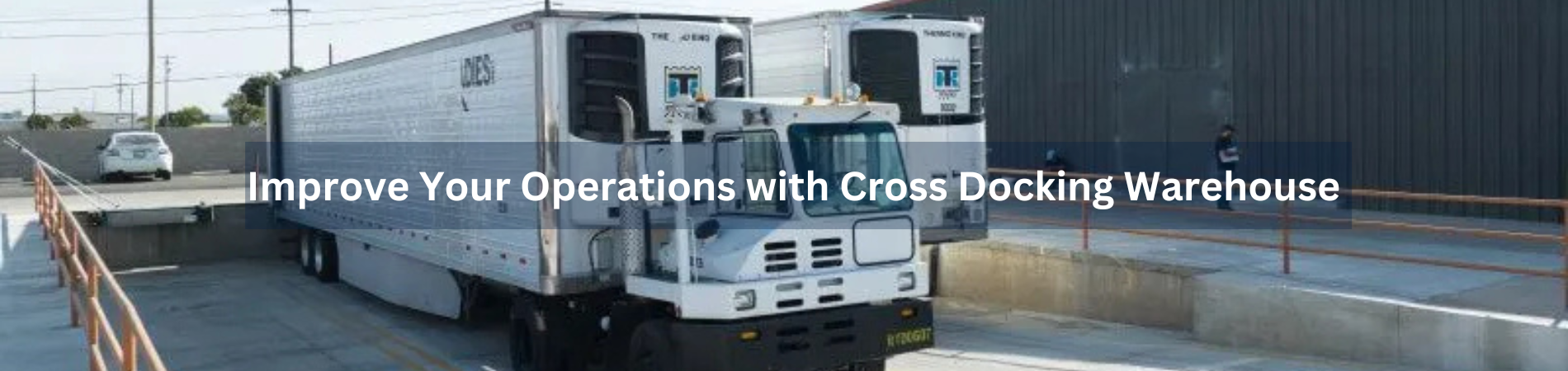
Your driver’s delayed at the dock, HOS is ticking down, and storage costs are still eating into profit. That’s the everyday reality for fleets moving freight through Central California right now. Letting freight sit idle in a storage facility kills your margins and burns through your drivers’ Hours of Service. But taking that freight and moving it straight from an inbound trailer to an outbound one changes the math completely.
That’s exactly what a cross-docking service does for your operation. Rather than logging pallets into a huge inventory system where they sit for an indefinite period, you get your trucks in, unload them, and get them back on the road. If you’re ready to cut the dead weight out of your supply chain, let’s break down exactly how this process works and why it makes sense for your fleet.
What is a Cross-Docking Warehouse?
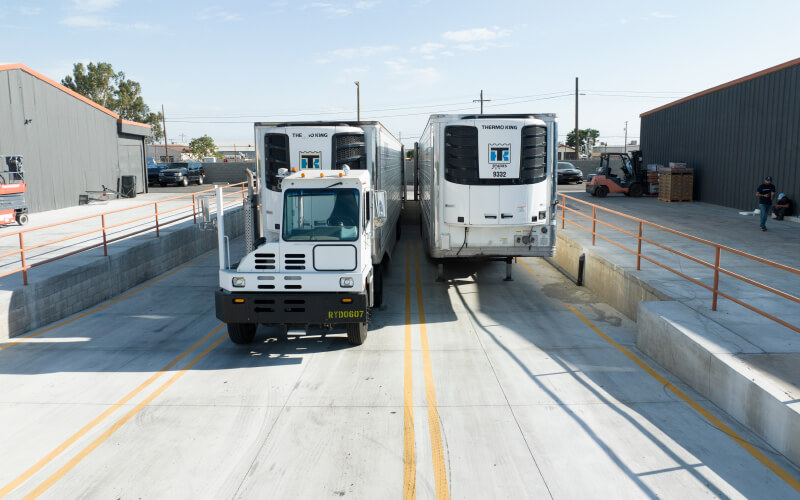
Essentially, a cross-docking facility is a fast-paced transit hub. Rather than unloading pallets, entering them into a giant inventory system, and storing them on steel racks for a month, the freight is processed on the spot. The goods are unloaded, sorted, and transferred directly to an outbound trailer with little to no storage time in between. You completely skip the traditional warehousing phase.
Here is how a standard transfer looks in the real world:
- An inbound truck arrives at the dock doors and unloads its freight, which is often a mixed load or a consolidated LTL (Less Than Truckload) shipment.
- The warehouse team jumps in with pallet jacks and forklifts, immediately sorting the freight based on its final delivery destination.
- The sorted freight is loaded straight onto an outbound truck, usually within a few hours. Sometimes, it happens immediately if the second truck is already bumped to the dock. There is no long-term racking and no excess inventory holding.
The Core Benefits of Cross-Docking for Your Supply Chain
Transitioning away from long-term storage offers serious operational advantages for fleet managers, brokers, and dispatchers who need to keep the wheels turning.
Cost Savings on Labor & Storage
Commercial warehousing space is not cheap, especially in California. By skipping the put-away and picking phases, you eliminate expensive inventory holding costs. You also drastically reduce the labor hours needed to manage that freight. You are paying for the movement of the goods, not for them to collect dust on a shelf.
Faster Deliveries & Less Dwell Time
In a market where everyone expects fast shipping, keeping freight in continuous motion is non-negotiable. Cross-docking helps you avoid the dreaded bottleneck of a crowded warehouse. It also gives your inventory managers better visibility since products are not getting lost in the back of a massive facility. Your dispatchers can easily track exactly when a load hits the dock and when it leaves. Furthermore, keeping drivers moving rather than waiting keeps them happy, which is great for driver retention.
Fewer Touches, Fewer Freight Claims
Every time a forklift picks up a pallet, the risk of product damage goes up. Cross-docking involves significantly fewer touches on the freight. Fewer touches mean fewer OS&D (Over, Short, and Damaged) reports, fewer rejected loads at the receiver, and loads that actually arrive intact.
Scalability & Better Route Planning
Whether you are managing peak-season volume spikes around the holidays or handling regular LTL shipments, cross-docking gives you the flexibility to adapt without committing to a five-year warehouse lease. It also allows you to consolidate smaller shipments into one full truckload (FTL). This optimizes your truck routes, reduces empty deadhead miles, and saves serious money on diesel fuel.
How to Choose the Right Cross-Docking Provider
Not every facility with a dock door is equipped to handle high-speed freight transfers effectively. When vetting a logistics partner, you need to look at it from a trucker’s perspective and consider these critical factors:
Location & Yard Accessibility
The facility needs to be positioned near major distribution channels. A warehouse located just off CA-99 or I-5 in Bakersfield is gold because it prevents your drivers from wasting their HOS navigating heavy city traffic or tight industrial parks. The yard also needs to have enough room for a sleeper cab pulling a 53-foot trailer to actually turn around and back in safely.
Experience & Reliability
You want a team that has demonstrated experience in dealing with your particular freight, be that dry van goods, building supplies, or consumer goods. A veteran provider understands how to get around full carrier capacity, work with those who know their partners well, and execute on full carrier capacity, and how to coordinate and compensate for the always-present delays that happen on the road.
Technology & Communication
If your provider is not able to email you the signed BOLs (Bills of Lading) or the PODs (Proofs of Delivery) promptly, they are the ones holding up your billing department. They need to have the technology infrastructure to provide real-time information and facilitate coordination. Clear communication keeps your dispatch, brokers, and dock staff aligned.
Why Partner With Flying Bird Truck Repair?
This is where your operations get genuinely efficient. Partnering with Flying Bird Truck Repair means you get comprehensive freight support paired with heavy-duty fleet care right here in Bakersfield. We don’t just move your cargo; we actively keep the trucks hauling it running smoothly.
Turn Dock Time Into Maintenance
Think about the frustrating downtime you usually face when a rig needs routine service. While your freight transfers on our dock, your drivers can easily knock out their required 90-day BIT inspections, oil changes, or DPF cleaning. We take what is typically wasted dock waiting time and turn it into highly productive maintenance time.
24/7 Roadside Assistance Backup
If an inbound truck blows a tire or throws an engine code on the CA-99, our emergency roadside team is ready to dispatch immediately. Having a cross-docking partner who can also send a rescue truck prevents minor mechanical breakdowns from completely ruining your delivery schedule.
The Bottom Line
If your trucks are regularly running up and down Highway 99 or the I-5, routing them through a Bakersfield cross-dock just makes logistical sense. Your loads get transferred faster, your freight claims drop, and your drivers stay happy because they are actually logging miles instead of sitting at a dock. Plus, because we are a full-service repair shop, we can knock out a 90-day BIT inspection or a quick oil change while your trailers are being unloaded. Call Flying Bird Truck Repair Services now. We’ll look at your lanes and figure out a freight transfer schedule that actually works for your fleet.