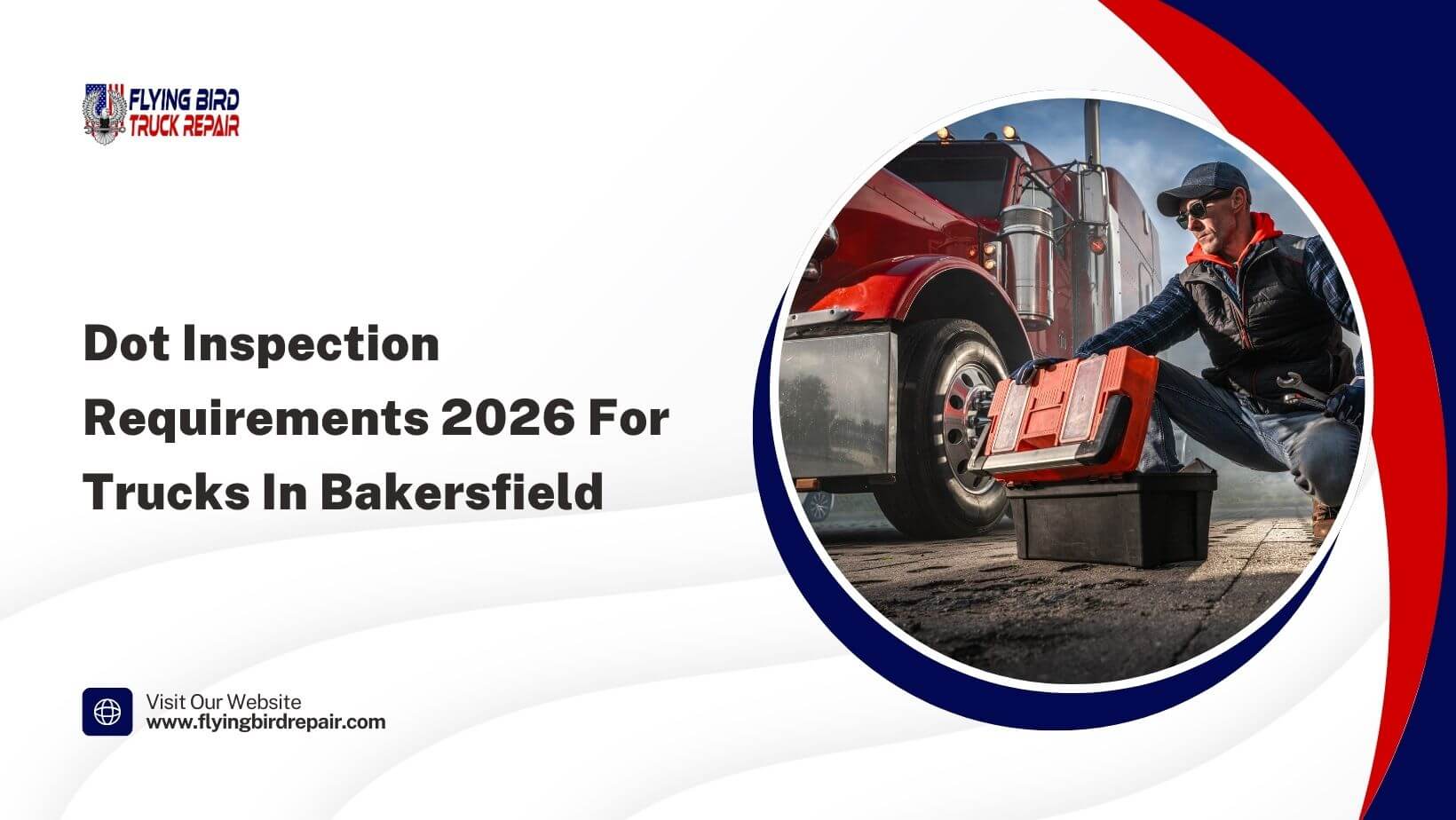
Understanding DOT inspection requirements is essential for every trucking company and owner-operator working in California. These inspections are not just routine paperwork—they are critical safety checks that keep drivers, cargo, and the public safe on the road.
For trucks operating in Bakersfield, this is especially important. The city sits along major freight corridors like I-5 and SR-99, making it a hotspot for roadside inspections and regulatory oversight. Staying compliant ensures smooth operations and helps avoid fines, downtime, and delivery disruptions. This blog will discuss DOT inspection requirements for 2026, common violations, and tips to prepare your trucks in Bakersfield.
What Is a DOT Inspection?
A DOT inspection is a formal safety and compliance check performed on commercial vehicles to ensure they meet federal and state regulations. These inspections are designed to reduce accidents caused by mechanical failures or noncompliant operations.
At the federal level, oversight comes from the Federal Motor Carrier Safety Administration (FMCSA). In California, enforcement is handled primarily by the California Highway Patrol (CHP). Inspections can occur at weigh stations, roadside checkpoints, or during terminal audits. They evaluate both the vehicle’s condition and the carrier’s compliance with safety standards.
DOT Inspection Requirements in 2026: What’s Required
Key DOT inspection requirements that remain strictly enforced in 2026 include federal annual inspections, California’s 90-Day BIT Inspection program, and emissions compliance under the Clean Truck Check. While these regulations are not brand-new, enforcement continues to increase, making full compliance more important than ever for trucks operating in Bakersfield.
Annual Federal DOT Inspection Requirements
One of the core DOT inspection requirements is the annual inspection. Any commercial vehicle or combination with a GVWR or GCWR over 10,001 pounds must undergo a complete inspection every 12 months.
This inspection must be performed by a qualified inspector and verifies that the vehicle is safe to operate. Proof of inspection must be documented and available as part of the carrier’s maintenance records. Without this annual inspection, a truck is considered out of compliance regardless of how well it appears to be running.
California 90-Day BIT Inspection Requirement
The 90-Day BIT Inspection (Basic Inspection of Terminals) applies to trucks with a GVWR of 10,001 pounds or more. Unlike the annual federal inspection, this program requires a documented safety inspection every 90 days. It ensures carriers consistently maintain their vehicles rather than waiting for a once-a-year check. The CHP monitors BIT compliance closely, and failure to keep up with inspections can quickly lead to penalties or audits.
Clean Truck Check (CARB) Emissions Requirement
Heavy-duty vehicles with a GVWR over 14,000 pounds must comply with California’s Clean Truck Check program, overseen by the California Air Resources Board (CARB). This program requires periodic emissions testing and reporting to ensure trucks meet state air quality standards. Continued non-compliance may lead to DMV registration holds and financial penalties if not corrected.
Complete DOT Inspection Checklist for 2026
A proper inspection covers both driver qualifications and vehicle condition. This section consolidates all credential and documentation requirements to avoid repetition elsewhere.
Driver Credentials
- Drivers must carry a valid Commercial Driver’s License (CDL) and maintain a current medical certificate.
- Inspectors verify that drivers are legally qualified to operate commercial vehicles.
- These credentials are required for both annual DOT inspections and 90-Day BIT inspections.
Vehicle Documentation
- Carriers must maintain up-to-date registration, insurance, and operating permits.
- In addition, California carriers must maintain a valid CA Number issued by the California Highway Patrol (CHP) and a Motor Carrier Permit (MCP) as part of overall state compliance.
- Proper documentation is checked during annual DOT inspections, BIT inspections, and Clean Truck Check audits.
Vehicle Systems Checked
- Brake System – Proper function and wear condition
- Tires and Wheels – Safe tread depth and structural integrity
- Lights and Reflectors – Visibility and proper operation
- Steering Mechanism – No excessive play or damage
- Suspension and Frame – Structural stability
- Cargo Securement – Properly restrained loads
- Emissions Control Systems – Functioning components meeting standards
Keeping all driver credentials and vehicle documentation in one place ensures clarity and avoids repeating the same info in BIT or Clean Truck Check sections.
Most Common DOT Inspection Violations
Understanding common violations helps carriers prevent them. Frequent issues include:
- Worn or improperly adjusted brakes
- Damaged or underinflated tires
- Non-functioning lights
- Hours-of-Service and ELD record violations
- Improper cargo securement
- Emissions system non-compliance
These problems often stem from delayed maintenance, incomplete documentation, or failure to follow federal and California compliance requirements.
Penalties for Failing to Meet DOT Inspection Requirements
Failing to meet DOT inspection requirements can have serious consequences. Carriers may face federal and state fines, and vehicles can be placed out of service until issues are corrected.
Violations can also impact a company’s CSA safety score, which affects reputation and insurance rates. Delays from inspections and repairs can disrupt delivery schedules, causing financial and operational setbacks.
How to Prepare for DOT Inspections in 2026
Routine Fleet Maintenance
Consistent pre-trip and post-trip inspections help drivers catch problems early. Carriers should also maintain detailed repair and service records to demonstrate proactive maintenance.
Driver and Staff Training
Regular training ensures drivers understand inspection expectations and know how to identify safety concerns before they become violations.
Using Technology for Compliance
Digital tools such as maintenance tracking systems and compliant ELDs make it easier to store records and demonstrate compliance during inspections.
Conclusion
The DOT Inspection Requirements for 2026 place a strong emphasis on vehicle safety, emissions compliance, and consistent maintenance practices. Staying organized, maintaining vehicles regularly, and working with qualified inspection professionals can help carriers avoid fines, downtime, and costly violations while keeping their trucks safely on the road. At Flying Bird Truck Repair, we help Bakersfield truck operators stay ahead of regulations and ensure every vehicle meets federal safety standards. Schedule your DOT inspection with us today and keep your fleet compliant and road-ready!
FAQs: DOT Inspection Requirements 2026 for Trucks in Bakersfield
1. What are DOT inspection requirements for trucks in 2026?
DOT inspection requirements include annual safety inspections for commercial vehicles with a GVWR over 10,001 pounds. These inspections ensure vehicles are safe to operate and comply with federal and state regulations, including driver credentials, vehicle documentation, and essential vehicle systems.
2. Who enforces DOT inspections in Bakersfield?
DOT inspections are enforced federally by the FMCSA (Federal Motor Carrier Safety Administration). In California, the California Highway Patrol (CHP) also monitors compliance during roadside checks and terminal audits.
3. What vehicle and driver items are checked during a DOT inspection?
Inspectors review:
Vehicle systems: brakes, tires, lights, steering, suspension, cargo securement, and emissions controls
Driver credentials: CDL license, medical certificate
Vehicle documentation: registration, insurance, operating permits
4. What are the most common DOT inspection violations?
Frequent violations include worn or improperly adjusted brakes, damaged or underinflated tires, non-functioning lights, improper cargo securement, hours-of-service/ELD record violations, and emissions system non-compliance.
5. How can trucking companies prepare for DOT inspections in 2026?
Preparation includes routine fleet maintenance, detailed repair and service records, driver and staff training on safety standards, and using technology like digital maintenance tracking systems and compliant ELDs to stay organized.