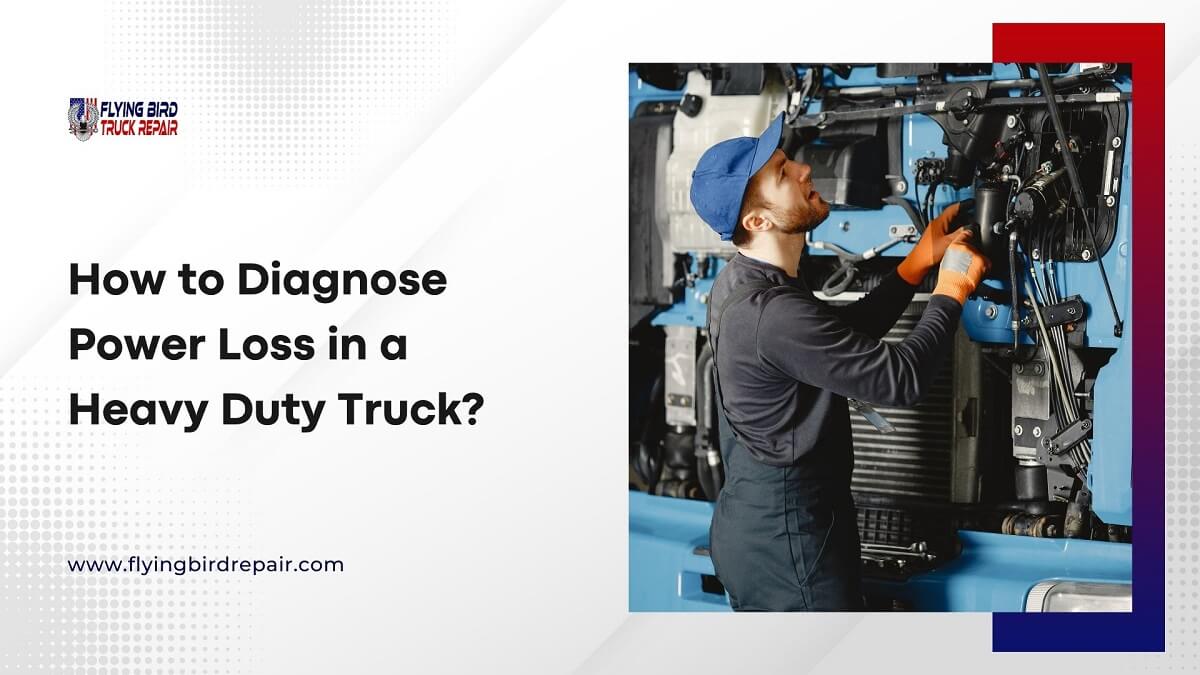
A decrease in power in a heavy-duty truck goes far beyond performance concerns. It impacts safety, fuel economy, delivery timelines, and the engine’s lifespan. Whether you’re transporting cargo or covering extensive highway distances, any significant power reduction must not be overlooked.
Often, drivers become aware of the problem when realizing why the truck lost power while driving or has difficulty accelerating. Recognizing reasons and learning to identify the problem early can help avoid expensive failures. This guide explains common warning signs, underlying causes, diagnostic steps, and prevention tips to help keep your truck operating at full strength.
Common Warning Signs Your Truck Is Losing Power
Power outages seldom occur without signs. Noticing early indicators can assist you in resolving issues before they escalate.
Typical indicators of concern comprise:
- Sluggish or delayed acceleration
- Difficulty while climbing hills or pulling heavy loads
- Unexpected loss of power while driving at highway speeds
- Reduced fuel efficiency
- Engine hesitation or rough performance
- Dashboard warning indicators are lighting up
If a truck has lost power while driving without an obvious reason, it often highlights an issue within the fuel, air, exhaust, or electronic systems. Knowing these signs early makes diagnosis quick and repairs more manageable.
What Causes Power Loss in a Heavy-Duty Truck
There are a number of systems that collaborate to produce power in a heavy-duty truck. In case of failure, there is a decline in the general performance.
Air Intake Issues
- Air filters are clogged or dirty, which reduces airflow
- Intake hoses that are cracked or loose lower the efficiency of combustion
Fuel System Problems
- Blocked fuel filters restrict the flow of fuel
- Non-functional injectors provide disproportionate fuel
- Pump problems led to low fuel pressure
Boost Failures and Turbocharger Failures
- Leaks of boost on hoses or intercoolers
- Torn turbo parts are decreasing air compression
Exhaust and Emissions Restrictions
- Plugged diesel particulate filters
- Stuck or dirty EGR valves
Electronic and Sensor Malfunctions
- Incorrect sensors are transmitting the wrong information to the engine control module
- Limping or derating of the engine
The development of these problems may result in loss of power while driving. Before you start working on any heavy-duty truck, it is necessary to comprehend the cause of the problem.
How to Diagnose Power Loss in Heavy Duty Trucks
Evaluate Air Intake and Charge Air System
Dynamic diagnosis should start with an inspection of the air intake and charge air cooler system. Limited air supply due to blocked air filters, broken intake hoses, or charge air piping leaks limits oxygen supply, which has a direct effect on combustion efficiency. Even minor boost leakages can result in loss of power in an evident way when the vehicle is being driven, particularly when the vehicle is accelerating heavily.
Evaluate the performance of Fuel Delivery and Injection
When a truck loses power while driving, the problem of fuel delivery is a frequent reason for this. Restriction check fuel filters, check the pressure of fuel under load, and check the injectors for spray patterns. The irregular occurrence of fuel supply does not allow the engine to sustain torque, especially when it is under a heavy load setup.
Test Turbocharger and Boost Control Components
The performance of the turbocharger should be checked by comparing the readings on the boost pressure with the manufacturer’s specifications. Bogging wastegates, malfunctioning actuators, or worn-out turbo bearings may reduce the boost output, causing slow engine response.
Breakdown Exhaust Aftertreatment and Engine Electronics
Blocked DPFs, defective EGR valves, or incomplete regeneration cycles may result in exhaust backpressure, which decreases the engine’s power. Fault codes and sensor data, along with derate conditions, should be reviewed with diagnostic scan tools to establish the specific heavy-duty truck repair that should be made.
Situations When Expert Assistance Becomes Crucial
Recurrent Power Failure under Load or Highway speeds
When a truck has a habit of losing power when accelerating at highway speed or when it is transporting a heavy load, it would be imperative to have the vehicle professionally diagnosed. These symptoms are usually signs of inner fuel system, turbo, or aftertreatment problems, which cannot be solved by simple inspection procedures.
Limp Mode Activation or Engine Derating
The present heavy-duty trucks are programmed to shield the engine by lowering the power when faults are detected. Limp mode or frequent derating events indicate sensor failures, emissions problems, or control module problems, which demand high-tech diagnostic equipment used by expert heavy-duty truck repair services only.
Constant Warning Signs and Fault Codes
Dashboard warning lights that are not turned off even after a filter change or regular servicing would indicate an underlying failure of the electronic or emissions-related systems. Hydraulic clearing codes, which should not have been analyzed, can restore performance in the short term, but can cause additional harm.
Excessive Exhaust Smoke or Rising Exhaust Temperatures
Abnormal exhaust smoke, excessive exhaust gas temperatures, or malfunctioning of the regeneration cycles will reflect combustion or aftertreatment inefficiencies. These circumstances can easily develop into expensive repairs when ignored.
Power Loss Even After Basic Repairs
In the event a truck develops a loss of power during driving, and there is no improvement in performance following the standard maintenance, then certified technicians are required to carry out extensive tests and come up with accurate heavy-duty truck repair measures.
Final Words
Scenarios like loss of power while driving should never be disregarded because it frequently indicates underlying mechanical or electrical problems that could get worse over time. To restore performance and avoid expensive breakdowns, a systematic diagnostic approach and prompt maintenance are essential. Reputable experts are crucial when the problem becomes complicated or persistent. To keep your truck operating safely and effectively, our skilled technicians at Flying Bird Truck Repair offer precise diagnostics and dependable heavy-duty truck repair services.
FAQs About Heavy Duty Truck Power Loss
What are some of the most frequently heard causes of the loss of power by a heavy-duty truck while driving?
The most common causes of power loss include the limitation of airflow, blocked fuel filters, turbocharger, and exhaust aftertreatment, or defective sensors causing engine derating.
Do clogged DPFs lead to sudden loss of power in a truck?
Yes. A clogged diesel particulate filter will cause exhaust backpressure, thereby lowering engine efficiency and possibly trapping the truck in a reduced-power or limp mode.
Why is it that my truck loses power when it is carrying heavy loads?
This typically refers to issues in supplying fuel, the leaking of boost, or inefficiency in the turbocharger, which is only detected in high-load situations.
Should I continue driving when my truck loses its power while driving?
It is not safe to keep on driving because loss of power is usually an indication of engine protection measures. The act of further driving may result in overheating, damage to components, or a total failure.
How often should diagnostics be performed to prevent power loss?
Regular diagnostic checks on the routine maintenance identify defects before they manifest themselves in terms of performance or alarm bells.
When is the right time to call in a heavy-duty truck repair specialist?
In case the loss of power is repeated with warning lights or the same does not disappear after simple maintenance, it is essential to conduct complex heavy-duty truck repairs in order to avoid significant breakdowns.