California has a commercial truck parking problem, and any driver who has run the I-5 or the CA-99 corridor already knows it. When Hours of Service run out and the ELD locks the truck down, the options are rarely good. Truck stops are full by early evening. Rest areas have posted time limits and no security. That leaves a lot of drivers making a call they would rather not make: pulling into an unsecured dirt lot off an exit ramp, cutting the engine, and hoping their load and their equipment are still intact when they wake up.
The risks of that situation are not theoretical. According to CargoNet, Cargo theft in California runs into hundreds of millions of dollars annually, and unsecured lots are where most of it happens. For owner-operators and fleet managers running through Central California, the answer to this problem is secure, dedicated commercial truck parking in Bakersfield. Here, we discuss the immense importance of a secure truck yard.
What Separates a Real Truck Yard from a Dirt Lot
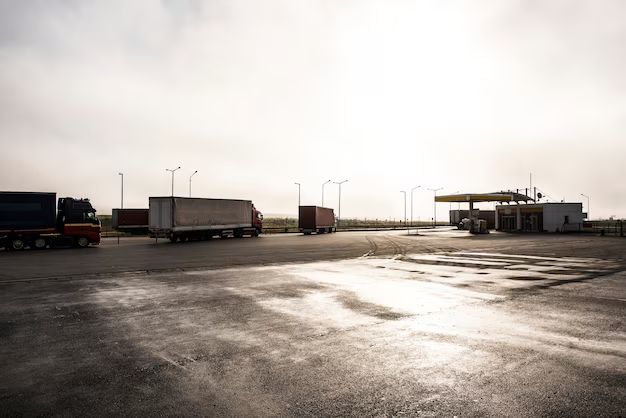
Not every “truck parking” option is worth what it charges. There is a significant difference between a facility that calls itself a truck yard and one that is actually equipped to protect commercial equipment and freight overnight or long-term.
Access Control and Security
A basic chain-link fence does not deter a determined cargo thief. A real secure yard has controlled gate access, meaning vehicles need authorization to enter, not just a gap in the fence wide enough to walk through. That access control needs to be backed up by cameras covering the yard perimeter and the parking areas. When a fleet manager needs to file an insurance claim or dispute a theft incident, documented camera footage matters. A yard with no access control and no surveillance is not a security solution.
Lighting and Yard Surface
A dark yard is an unsafe yard, plain and simple. Proper commercial lighting across the full parking area deters theft and keeps drivers safe when they are walking to and from the cab at night. Beyond lighting, the surface of the yard matters more than most people realize until the first heavy winter rain. A dirt lot that bakes hard in the summer can turn into a deep mud problem between November and March. A truck that drives in fine weather gets stuck trying to pull out with 40,000 pounds on the trailer. A graded, compacted, or paved surface handles year-round use without becoming a recovery operation.
Enough Room to Actually Maneuver
This sounds obvious, but a lot of facilities that advertise truck parking were not designed with a sleeper cab and a 53-foot trailer in mind. A driver pulling a loaded flatbed or a dry van needs enough room to swing wide on entry, position the truck, and exit without jackknifing. Before committing to any yard, confirm that it was built for commercial vehicle use, not just repurposed from something else and squeezed with extra spots.
Short-Term Layovers vs. Long-Term Fleet Storage
The need for secure truck parking looks different depending on who is asking for it. For an owner-operator mid-run, it is about one safe night. For a fleet manager, it might be about storing five units over the winter. Both are legitimate needs, and both require different things from a parking facility.
Short-Term Layovers and HOS Resets
When a driver’s clock runs out between loads, they need somewhere to reset without spending the next eight hours watching their mirrors. A secured yard with camera coverage and controlled access means a driver can actually sleep. That matters more than most fleet managers who don’t drive realize. Fatigue-related incidents spike when drivers can’t get quality rest, and quality rest doesn’t happen in an unsecured lot where catalytic converter theft is a real possibility.
Long-Term Fleet Storage
For fleet managers, the math on long-term storage is straightforward. Parking unassigned equipment or staging loaded trailers at a secure location means you always have equipment positioned where the freight is, without paying to deadhead a truck back to a home terminal. Bakersfield sits at a natural crossroads for loads moving between Southern California, the Bay Area, and the Central Valley. Staging equipment here gives dispatchers flexibility to cover multiple lanes without repositioning from scratch each time. Off-season storage for seasonal equipment also becomes far less of a logistical and security headache when the yard is fenced, lit, and monitored.
The Operational Benefits Fleet Managers Don’t Always Factor In
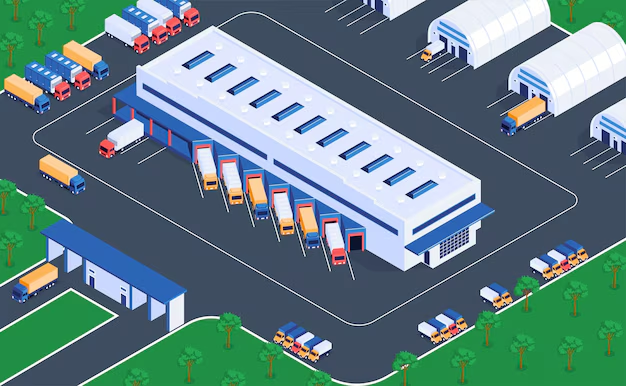
The case for dedicated truck parking usually gets made around security, and security is the right starting point. But there are downstream benefits that affect the operation in ways that don’t show up until you start tracking them.
Lower Cargo Theft and Insurance Exposure
Every cargo theft claim impacts your insurance premiums. A fleet that consistently parks in unsecured locations accumulates a claims history that insurers price accordingly at renewal. Documented use of a secured facility with access control and camera surveillance is the kind of risk management detail that actually influences what you pay for cargo coverage over time.
Driver Morale and Retention
Guaranteed access to a safe, clean parking location, especially for long-haul drivers running the California corridor regularly, is a tangible benefit that affects whether drivers want to stay on. Retention isn’t just about pay rates. It is about whether the job feels manageable daily, and parking stress at the end of a long shift contributes more to burnout than most companies account for.
Cleaner Dispatching
When a dispatcher knows exactly where staged equipment is sitting in Bakersfield, they can plan next-day assignments without spending forty-five minutes tracking down where a unit ended up. Equipment that is parked at a known, secure location with confirmed availability is easier to dispatch efficiently. That translates directly to fewer missed load opportunities and tighter overall route planning up and down the Central Valley.
Parking + Maintenance: A Combination That Actually Saves Time
Here is the part that most parking facilities can’t offer. At Flying Bird Truck Repair, the parking yard and the repair shop operate together. That combination changes the math on downtime significantly.
A truck parked for a 10-hour HOS reset doesn’t have to just sit there. While the driver rests, our technicians can knock out an oil and filter change, run through a 90-day BIT inspection, or perform a DPF cleaning. Work that would normally require a separate trip to a shop gets done while the truck is already stationary. For fleet managers running tight schedules, that is not a small thing. It turns what would otherwise be pure downtime into scheduled maintenance hours without pulling the unit off a run to do it.
Conclusion
Safe parking is not a convenience; it is part of running a commercial fleet responsibly. The California parking shortage is not getting resolved anytime soon, and the consequences of parking in the wrong place range from a cargo theft claim to a DOT violation to a driver who simply stops showing up for work because the job got too stressful. A secure yard in Bakersfield with proper access control, lighting, and enough room for full-size commercial equipment is a practical, operational solution to a problem that costs fleets real money every year.
Stop stressing about where your equipment is sitting tonight. Contact Flying Bird Truck Repair to secure a short-term parking spot or discuss long-term fleet storage options at our Bakersfield yard. If your trucks need maintenance while they are here, we handle that too.