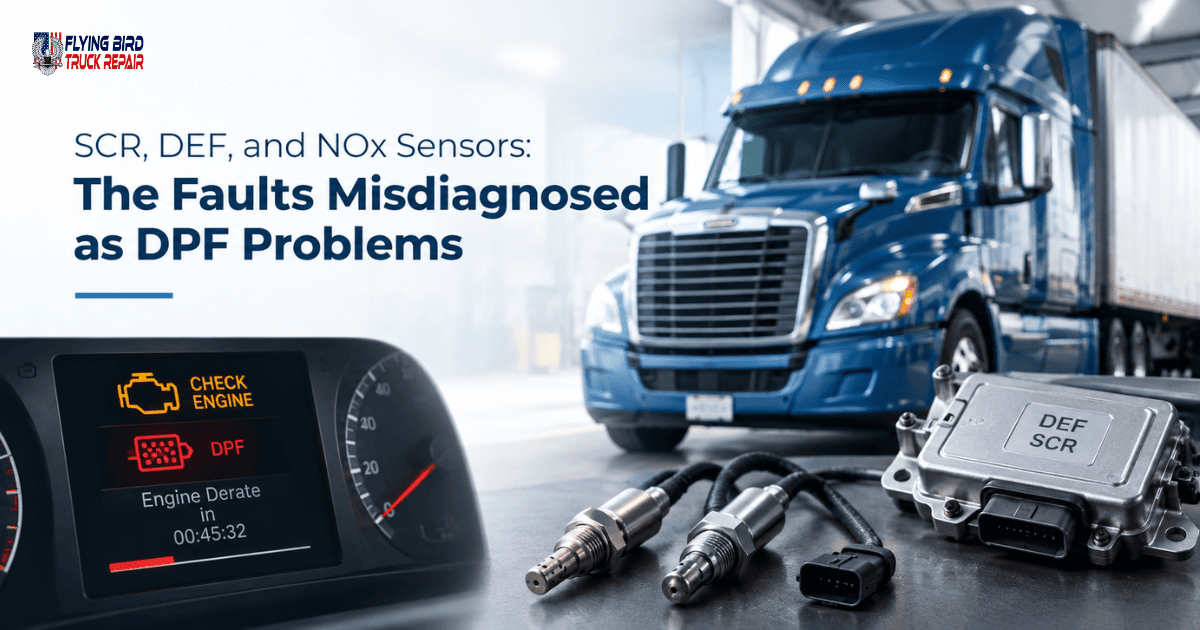
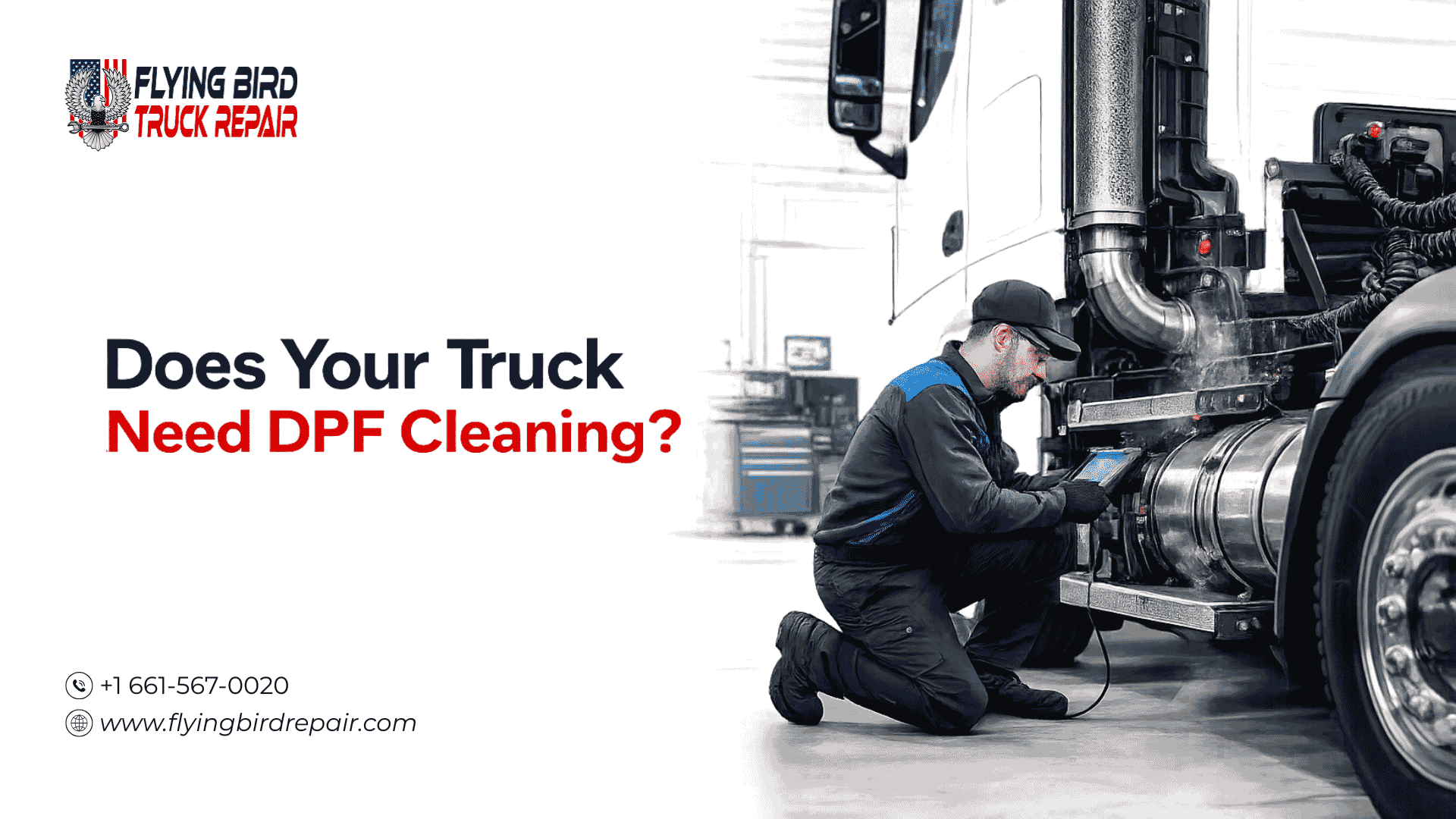
If your DPF warning light keeps coming back, no matter how long you drive, your filter is no longer cleaning itself. Diesel particulate filters are designed to trap soot from your exhaust, but they need to burn that soot off regularly to keep your truck running smoothly.
When this regeneration process drags on, drops out early, or fails, it is an early warning sign that a professional DPF filter cleaning service is overdue. Ignoring this does not just waste fuel; it leads to massive downtime and missed loads.
Let’s look at why your truck is struggling to regenerate and exactly what you can do to fix it before you end up stranded on the shoulder.
What Is DPF Regeneration, and How Long Should It Take
Your truck’s exhaust aftertreatment system uses three main regeneration methods to clear out soot.
- Passive regeneration occurs naturally while you are driving at highway speeds under a heavy load, as the exhaust heats up enough to burn soot continuously.
- Active regeneration is triggered by your engine’s computer when the DPF soot load percentage gets too high. During this phase, extra fuel is injected to raise the exhaust temperature, usually taking about 20 to 40 minutes.
- Forced regeneration is a manual, high-RPM process performed while parked safely, and it typically takes about 45 minutes.
If your regen cycle is dragging on for over an hour or two, something is definitely wrong. A drawn-out cycle means the system is fighting a clog it simply cannot burn away. Instead of clearing the filter, your truck is just burning expensive diesel with nothing to show for it.
Warning Signs Your DPF Regeneration Is Failing
You know what your truck normally sounds, feels, and performs like. Catching a filter problem early means paying attention to these red flags before the engine shuts itself down:
The light refuses to clear: If the DPF light stays on even after 30 to 45 minutes of continuous highway driving, your truck has lost the ability to clear the soot.
Constant regen cycles: Your truck should not be regenerating constantly. If it tries to regenerate multiple times a day instead of the usual once or twice a week, the filter fills up faster than it can empty.
Aborted forced regens: Forced DPF regen failure occurs when the parked cycle drops out or aborts in under 30 minutes, usually because a sensor detects a major fault.
Terrible fuel mileage: Fuel efficiency drops drastically because the engine is fighting heavy exhaust backpressure, forcing it to work twice as hard just to maintain highway speeds.
Total loss of power: You end up with a limp-mode diesel truck, as the engine control module (ECM) severely limits your speed to protect the engine from destroying itself.
Visible exhaust smoke: Puffs of black or white smoke exiting the stack signal that the filter is either cracked or completely failing to process soot.
Strange cab smells: Strong, unusual exhaust smells leaking into or around the cab during idling indicate exhaust gases are backing up.
Common Root Causes Behind A Struggling DPF
Regeneration problems do not just happen out of nowhere. One common culprit is heavy idling or frequent short trips. If you spend hours idling at shipping docks or sleeping in your cab with the truck running, the exhaust never gets hot enough to burn off soot naturally. Mechanical failures also play a huge role. A faulty EGR valve, failing turbo seals, or bad fuel injectors can dump raw fuel or oil directly into the filter.
Over time, you also have to deal with ash. This is the silent killer of DPFs. While soot burns off during a normal high-heat regen, ash is a permanent physical byproduct of burned engine oil that slowly accumulates in the filter’s honeycomb structure. Once the filter gets packed with ash, no amount of highway driving or parked regens will clear it. This is exactly why routine DPF ash buildup cleaning is required to physically remove the blockage.
The Stages Of DPF Clogging
Catching a clogged filter early saves you a massive headache and keeps you out of the tow truck. Here is how the problem usually progresses if you ignore the dashboard:
Stage 1 (Amber Warning): The soot load is getting slightly high. Usually, pulling a heavy load at highway speeds for 45 minutes will generate enough heat to clear it out.
Stage 2 (Forced Regen Needed): The soot level has reached around 75%. The truck can no longer fix this while driving, meaning you need to pull over for a parked, forced regen.
Stage 3 (Manual Cleaning): Soot and ash levels are above 85%. Parked regens will fail. The filter must be physically removed from the exhaust system and cleaned by a professional.
Stage 4 (Engine Shutdown): Your truck is limited to 5 mph, multiple fault codes are flashing on the dashboard, and if you turn the engine off, the ECM will not let you restart it. This is a full-blown emergency, leading you to call truck roadside assistance immediately.
DPF Filter Cleaning Service Versus Full Replacement
Many drivers panic when the light stays on and assume they need to buy a brand-new filter, which can cost thousands of dollars. In most cases, a professional DPF filter cleaning service is all you need to get back to making money. Professional DPF cleaning methods include high-pressure air and specialized baking ovens to blast away and burn off stubborn ash buildup that standard regens cannot reach. This process restores your filter to nearly brand-new capacity for a fraction of the cost.
However, replacement becomes unavoidable if the internal ceramic honeycomb structure is physically cracked, melted, or heavily contaminated with engine coolant. Delaying a simple cleaning puts immense backpressure on the engine, which is exactly what causes the filter to crack in the first place. Fixing it early turns a massive replacement bill into a standard maintenance expense.
Why Choose Our Diesel Truck Repair Shop In Bakersfield
Running routes up and down I-5 or across Highway 99 puts a lot of strain on your truck, especially with the heavy dust and extreme heat we see in the Central Valley. When your aftertreatment system acts up, you need mechanics who understand exactly what they are looking at.
Flying Bird Truck Repair Shop is equipped with the specialized dealer-level diagnostic tools needed to accurately read your specific DPF codes. We do not just guess; we pinpoint the exact sensor or blockage causing the issue. We handle everything from safe forced regens to comprehensive filter cleanings. Our goal is to quickly fix the root cause of the problem so owner-operators and local fleets can get back to work without worrying about breaking down.
Don’t wait until your engine shuts down on the road. Bring your rig to our diesel truck repair shop in Bakersfield. As Bakersfield’s go-to diesel repair experts, we will connect the diagnostics, identify the exact issue, and provide a thorough DPF filter cleaning to get you rolling again.
FAQs About Failed Truck Regens
How long does a forced DPF regen take?
A healthy forced regen usually takes about 45 minutes to complete, though it can vary slightly by engine make and model.
Can I drive my truck with the DPF light on?
Yes, but you should get up to highway speeds as soon as possible to help trigger a passive regen. If the light turns red, starts flashing, or your power drops, pull over immediately.
How often should a DPF be cleaned professionally?
Most heavy-duty engine manufacturers recommend a professional DPF ash buildup cleaning every 150,000 to 200,000 miles, depending heavily on your idle times and driving habits.
What happens if I ignore DPF regen problems?
Ignoring the warning signs will eventually lead to a forced DPF regen failure, which can throw your truck into limp mode and cause your engine to shut down entirely.