The Central Valley treats trucks differently from open highway routes. The heat is sustained, the grades are steep, and the harvest-season dust is relentless. What most drivers don’t realize is how quietly that environment shortens service intervals and sets up failures that could have been caught three oil changes ago.
A truck rarely breaks down all at once. It gives warnings first: coolant loss, unusual tire wear on the steer tire, and a regen cycle happening more often than before. These are not random inconveniences. They are early-stage failures, and they are far cheaper to fix before a breakdown than after.
That’s what makes preventative maintenance service essential. Below, we explain exactly which systems fail first on Bakersfield routes, the blind spots most fleets overlook, and what a proper maintenance strategy actually looks like.
How Local Bakersfield Routes Change Service Intervals
MiStandard OEM maintenance intervals look great on paper, but they are written for average operating conditions. Bakersfield does not have average operating conditions. Two specific factors drive accelerated wear here that fleet managers need to account for when building their service schedules.
The first is thermal shock. Trucks running from the 110°F valley floor up the steep 6% grade of the Tejon Pass go from sustained highway heat to maximum brake demand in a matter of miles. That kind of sustained thermal cycling stresses cooling system hoses, expands and contracts brake chamber hardware, and pushes transmission temps into ranges that shorten fluid life. Trucks that run this corridor regularly need cooling system inspections on tighter intervals than a standard line-haul unit doing flat highway miles.
The second is particulate load. During the almond and citrus harvests, the air in the Central Valley is thick with fine dust. A truck working agricultural routes or parked near harvesting operations is constantly ingesting that dust. While standard highway fleets can reasonably push engine air filters to 50,000 miles, trucks in these conditions need visual inspections much sooner. A restricted air filter reduces combustion efficiency, increases exhaust temperatures, and forces the engine to work harder to produce the same power output. It is one of the most overlooked contributors to poor fuel economy in this region.
3 Maintenance Blind Spots That Trigger Roadside Breakdowns
We see the same preventable failures roll into our truck repair shop every week. Owner-operators and fleet managers who want to protect their uptime need to look past oil changes and focus on the systems that actually strand trucks.
Air Dryer Cartridges in Automated Transmissions
Modern Automated Manual Transmissions (AMTs) rely on advanced solenoid valves that demand incredibly clean, dry air to function correctly. Most owner-operators do not think about their air dryer until something goes wrong. A standard line-haul truck might stretch a Bendix air dryer cartridge replacement to 24 months under ideal conditions. But heavy-duty vocational trucks working dusty agricultural environments need fresh cartridges every 12 to 18 months. Push it further, and moisture starts accumulating in the air system: jamming valves, causing sluggish brake response, and in cold overnight conditions, freezing air lines entirely. The cartridge is a low-cost item. The downstream repairs when you skip it are not.
Coolant SCA Levels and Liner Pitting
Cooling system maintenance is far more than checking for leaks and topping off the reservoir. Heavy-duty diesel engines require Supplemental Coolant Additives (SCAs) to maintain a protective chemical film around the cylinder liners. When those SCA levels drop below the required concentration, the natural vibration of the running engine causes microscopic air bubbles to form and implode against the unprotected metal surface. This is called cavitation erosion. It sounds minor until you understand what it does over time — it literally pits holes through the cylinder liner wall. A coolant test at every PM that checks SCA concentration costs almost nothing. Replacing an engine block because liner pitting went undetected costs significantly more.
DPF Face-Plugging From Excessive Idling
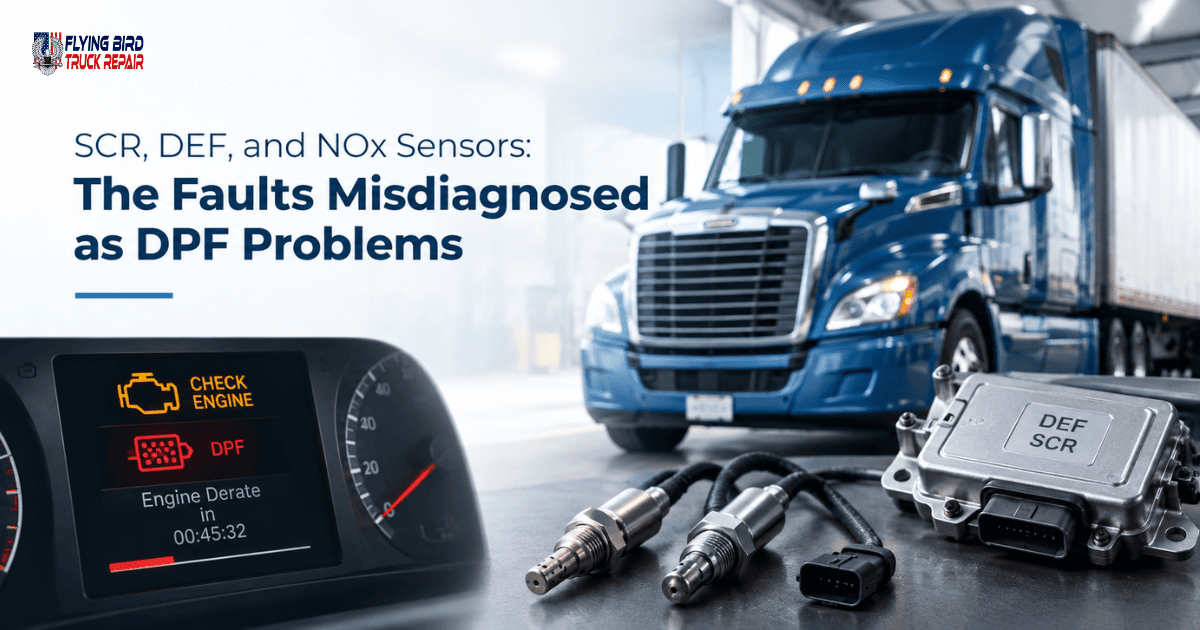
Prolonged idling at distribution centers, loading docks, and truck stops causes heavy ash and soot buildup inside the diesel particulate filter (DPF). A truck that runs mostly short trips or spends long hours at idle does not generate the sustained exhaust temperatures needed to complete a proper passive regen cycle. Over time, the filter face plugs. When that happens, the engine management system detects the restriction, throws a regen warning, and if ignored long enough, forces the truck into derate mode — limiting speed to 5 mph until the filter is serviced. We perform predictive DPF cleaning before trucks reach that stage, which keeps your unit earning instead of sitting on a diagnostic bay for two days.
Heavy-Duty Diagnostics: Beyond the Check Engine Light
Modern trucks are rolling computers. You cannot hit them with a wrench and expect an accurate diagnosis; you need dealer-level diagnostic software, a technician who understands what the codes actually mean, and the experience to trace a fault to its root cause rather than its symptom.
Here is something most drivers do not realize: a sensor can trip a fault code, reset itself, and leave no active warning light on the dashboard. The truck feels fine. The driver keeps rolling. But that historic code is sitting in the ECM, and it is often the first indication that an alternator, a pressure sensor, or a fuel system component is on its way out. During every routine A/B/C preventative maintenance service at Flying Bird Truck Repair, we pull the full historic fault code log — not just the active faults. That step has prevented unplanned breakdowns more times than we can count.
From ABS and electrical troubleshooting to complete DD15 engine overhauls, every repair begins with an accurate diagnosis of the truck. Replacing parts based on a guess might temporarily clear a dashboard light. It rarely fixes the actual problem. We fix the root cause.
Keep Your Rigs Moving with Flying Bird Truck Repair
Don’t wait for a tow truck to dictate your maintenance schedule. The fleets that keep their trucks earning are the ones that treat maintenance as an operational strategy — not a reaction to a problem that is already out of control.
At Flying Bird Truck Repair, we keep meticulous service records for every truck we touch, understand the specific demands of Central Valley routes, and schedule preventive work around your drivers’ mandatory resets so your equipment is not sitting idle when it should be rolling. Whether you need a full PM service, an emergency roadside repair, or a diagnostic workup on a truck that keeps coming back with the same complaint, our expert technicians are ready to work through it properly. Contact us today for routine truck maintenance or emergency repair needs.
Frequently Asked Questions About Truck Maintenance
Will new steer tires fix my alignment problem?
No. New tires on a misaligned truck wear the same way the old ones did — often faster because the tread is fresh and more responsive to the improper geometry. Always pair new steers with a laser alignment check. Skipping that step means you are investing in new rubber only to repeat the same wear pattern.
How fast can a mobile diesel mechanic get to me in Bakersfield?
Our mobile service trucks are dispatched immediately on every call, 24 hours a day, 7 days a week. Exact arrival times depend on traffic and your precise location along Highway 99 or I-5, but your call goes directly to dispatch—not to voicemail.
Do you handle refrigeration units?
Yes. We provide diagnostics and repair services for ThermoKing reefer units to ensure your temperature-controlled freight stays protected and compliant throughout your route.
How do I know if my DPF needs cleaning before it goes into derate?
Watch for an increase in regen frequency, a drop in fuel economy, or slow throttle response at highway speed. If your truck is regenerating more often than it used to without any change in your driving patterns, bring it in for an aftertreatment inspection before the system forces a derate.